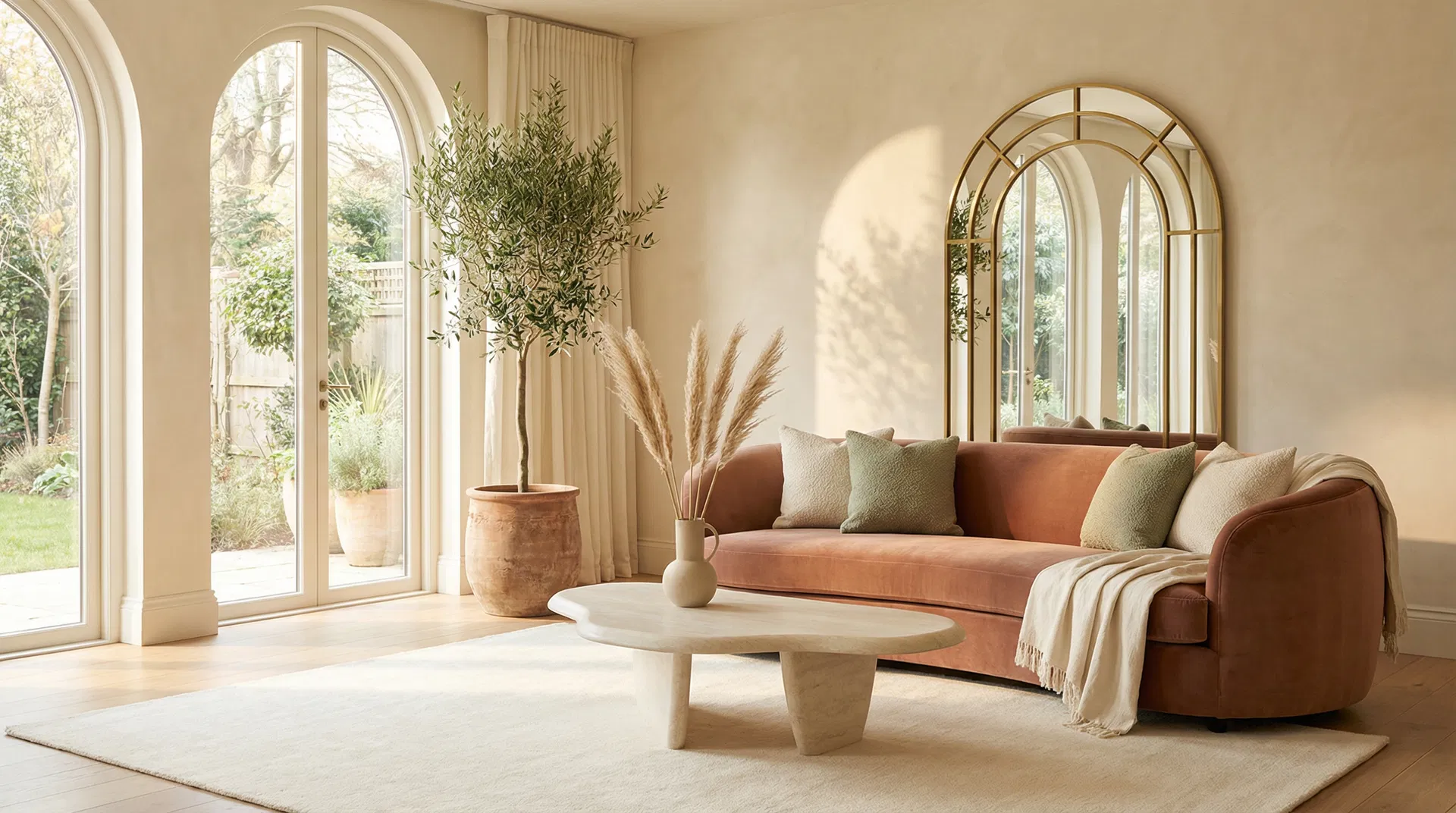

It's the question that keeps real estate agents up at night — or at least, it should. We've all seen it: the $2M listing that looks like it was furnished by a digital clearance aisle. The lighting is too sharp, the sofa is too symmetrical, and the surfaces have a "glow" that doesn't exist in nature.
In 2026, the "fake" look is a listing killer. Buyers are more digitally savvy than ever; they can smell a poorly rendered AI sofa from a mile away. When a room feels fake, it's not just a design failure — it's a trust failure. If the furniture isn't real, what else are you hiding?
The secret to "expensive" staging isn't about the price tag of the virtual furniture. It's about Staging Restraint and Visual Intelligence.
The Anti-Gloss Era
If your virtual stager is still using high-gloss chrome and "Millennial Gray" palettes, they're living in 2021. In 2026, we are officially in the Anti-Gloss Era.
Luxury now speaks in matte. We're seeing a massive shift toward limewash walls, soft plaster finishes, and unpolished wood. These materials absorb light rather than reflecting it, creating a sense of depth and "soul" that glossy surfaces simply can't replicate. In virtual staging, this means opting for fabrics like linen and bouclé over shiny leathers, and choosing ceramic or stone textures for coffee tables.
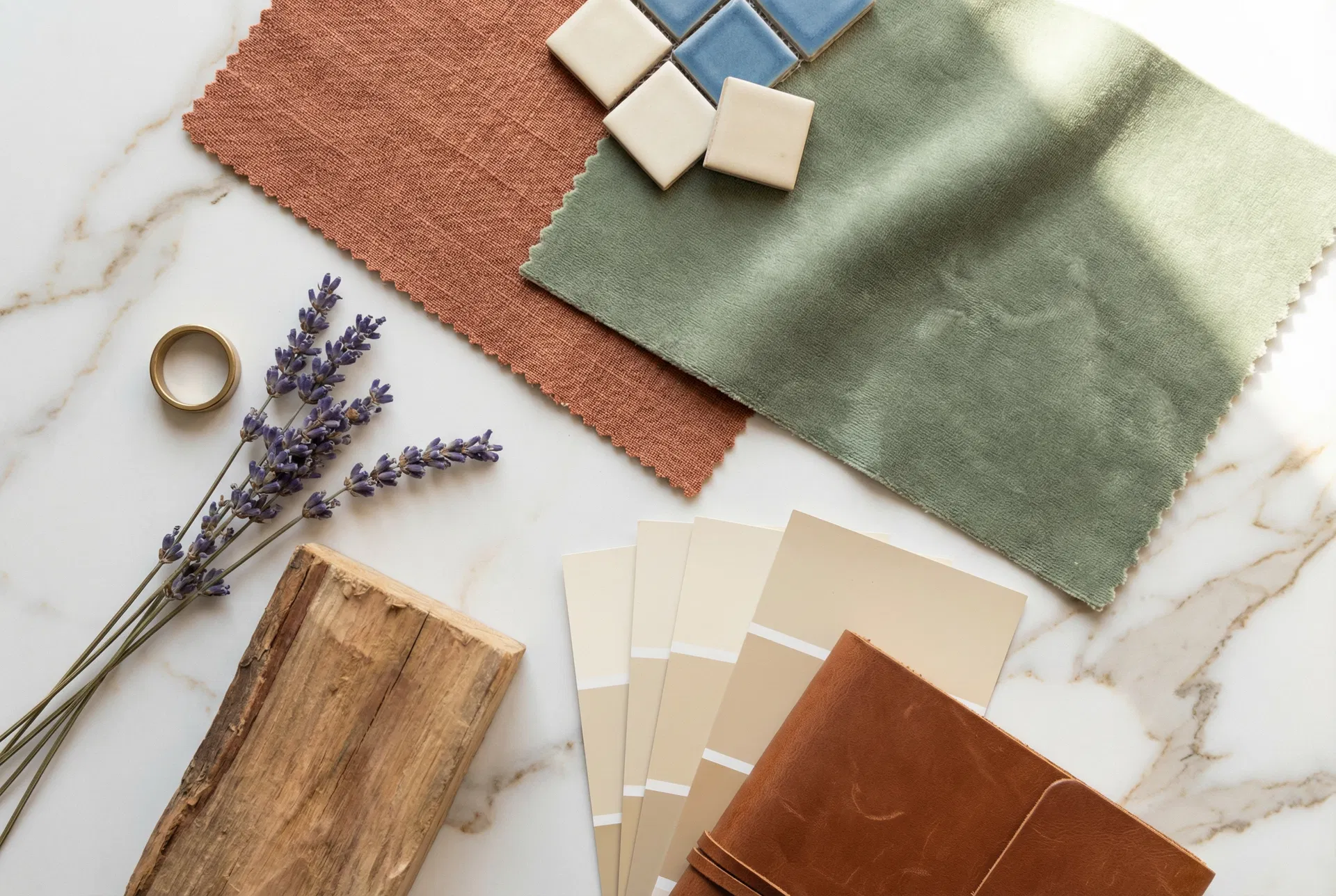
The 2026 palette: terracotta, sage, warm neutrals, and natural textures replace cold grays and chrome.
Neo-Deco Curves (Arched mirrors, fluted panels)
Sharp Geometric Minimalism (Hard edges everywhere)
Earth-Tone Palettes (Clay, Terracotta, Muted Green)
Cold Grays & Stark Whites
Layered Textures (Stone + Wood + Linen)
Matchy-Matchy Furniture Sets
"Lived-in" Imperfections (A casually folded throw)
Over-Perfected Symmetry
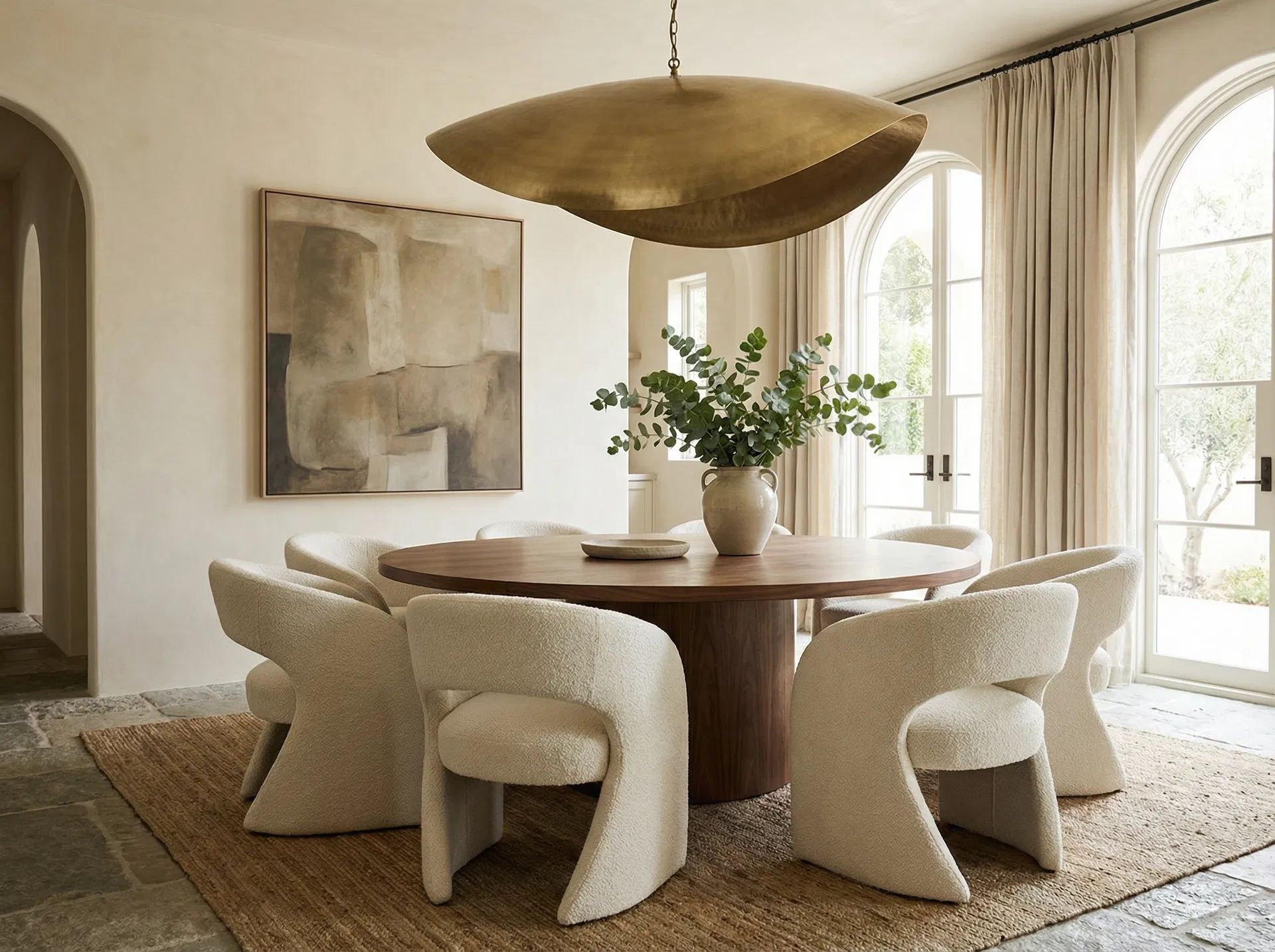
Neo-Deco dining: curved bouclé chairs, sculptural brass pendant, and warm walnut — sophistication without stiffness.
The "Hero Shot" Psychology
Buyers don't look at a room; they feel it. Within the first 2.5 seconds of scrolling, their brain has already decided if they can live there.
The most impactful staging isn't about filling a room; it's about Emotional Flexibility. A room should feel specific enough to be stylish, but neutral enough to be a canvas. In 2026, buyers are looking for "Sanctuary Spaces." They want to feel grounded. This is why Biophilic Design — integrating natural elements like rattan, woven baskets, and actual (virtual) greenery — is no longer optional. It's a biological trigger for "home."
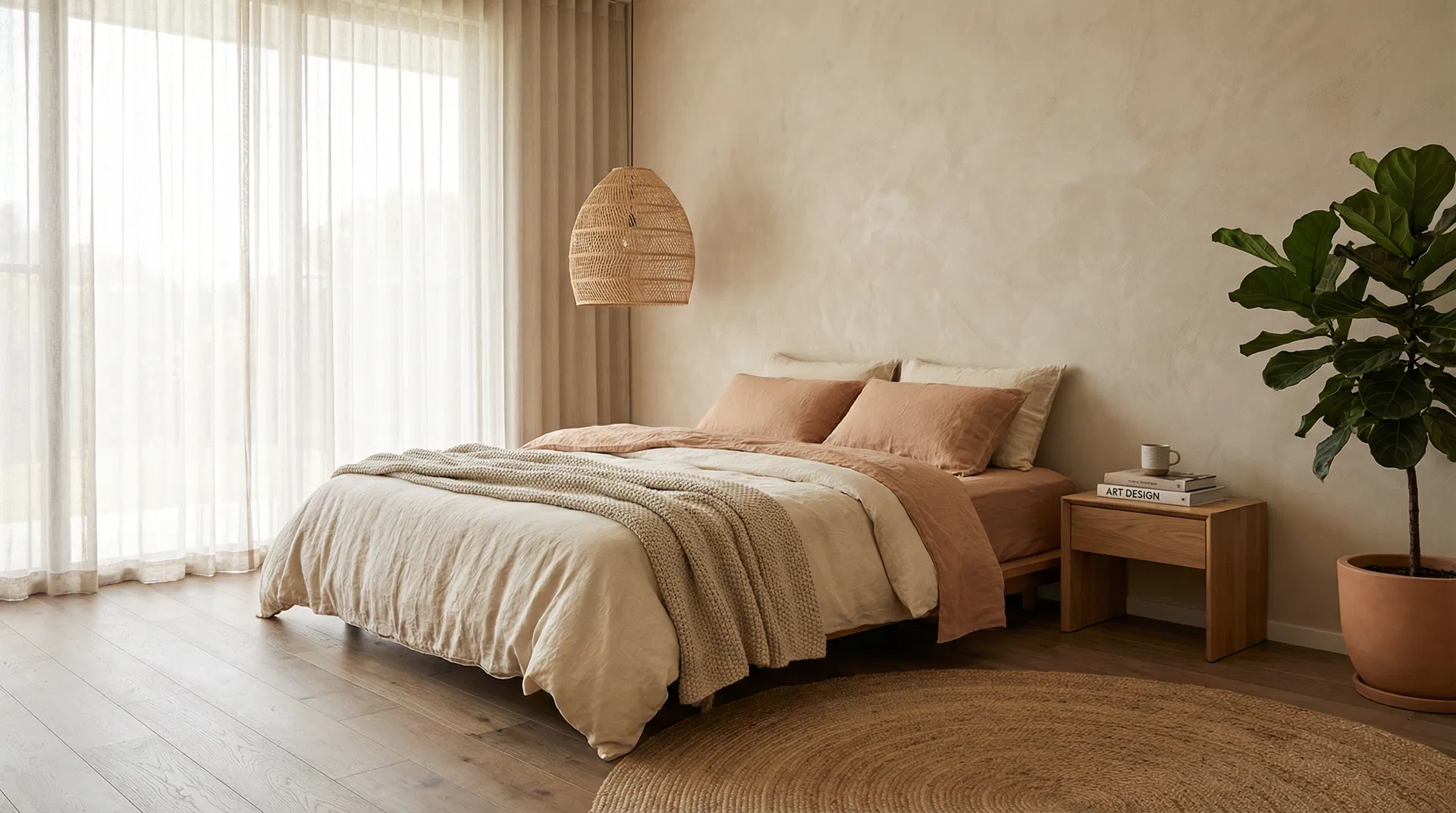
Sanctuary staging: linen, rattan, and warm clay tones create the biological feeling of 'home.'
The Power of Virtual Staging
Nothing sells a vacant room. An empty space forces the buyer's brain to do all the work — and most brains are lazy. Virtual staging bridges the imagination gap, but only when it's done with intelligence and restraint.
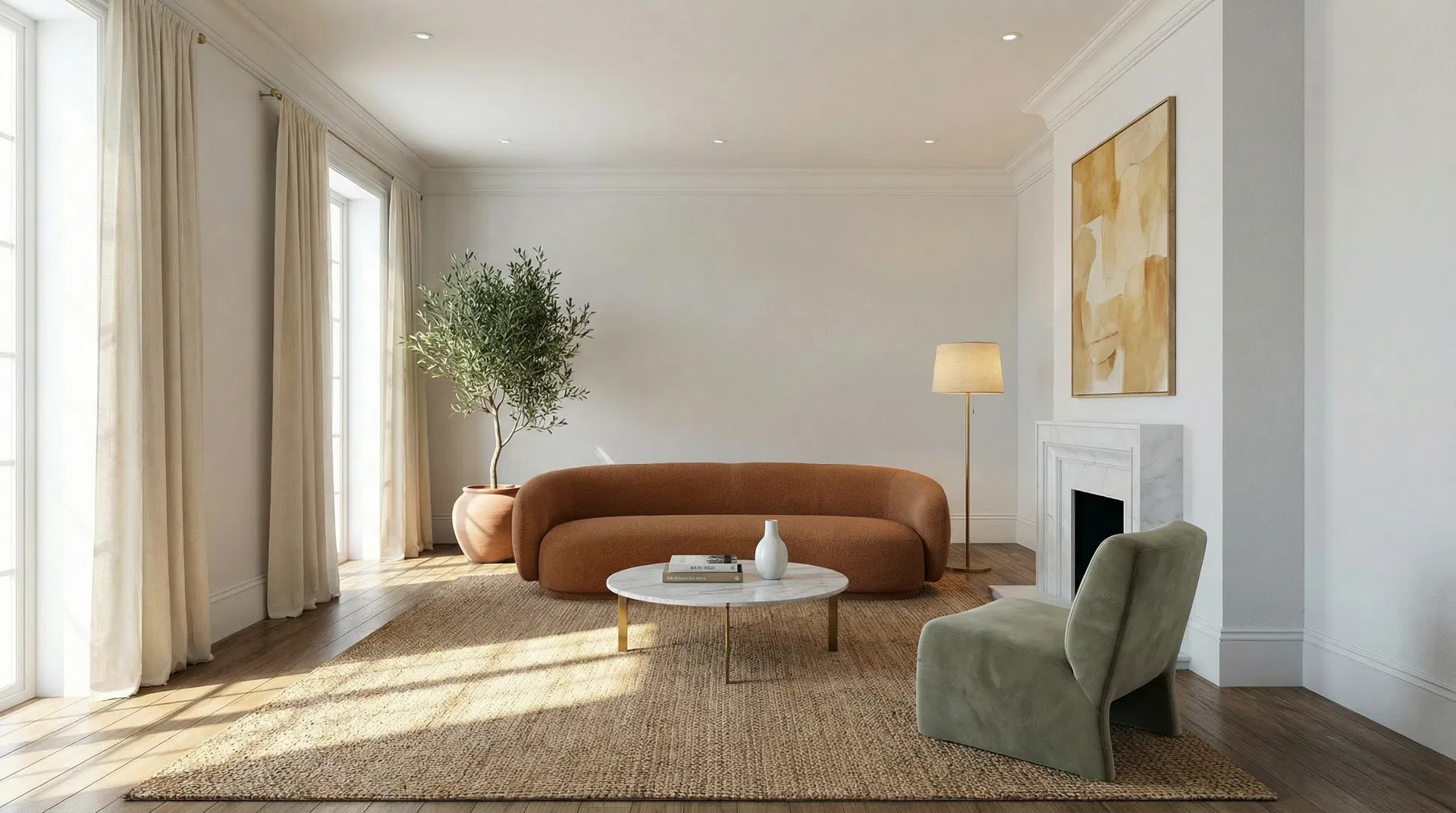
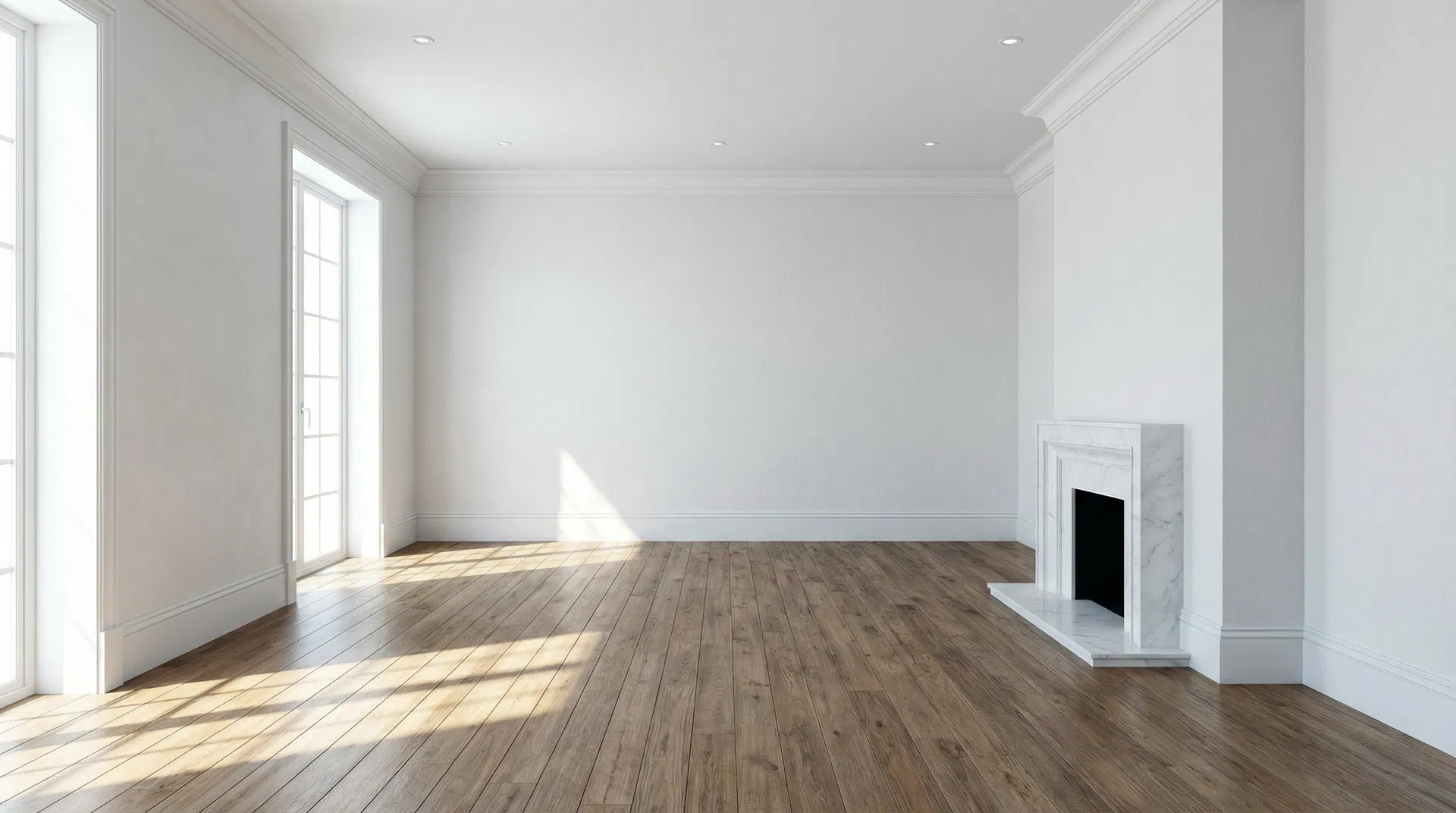
Drag the slider to reveal the transformation. Same room. Same architecture. Entirely different emotional response.
The Power of Scale
The biggest mistake in virtual staging? Incorrect Scale.
Nothing makes a room look "fake" faster than a virtual king-sized bed that leaves three inches of walking space. In 2026, the trend is Midimalism — a blend of mid-century scale and minimalist restraint. Use "leggy" furniture (pieces with visible legs) to show more floor space. This trick makes even small urban condos feel like expansive luxury suites.
Direct your virtual stager to add Subtle Storytelling: A stack of two books on the coffee table (not five). A single, high-quality ceramic vase with one branch of greenery. A throw blanket that looks like someone just stepped away from it. These "imperfections" are what make a digital image feel like a real home.
The "Showroom" Trap
Stop staging rooms to look like furniture catalogs. Real people don't live in catalogs.
The "Perfectly Fluffed Pillow" syndrome is real — and buyers see right through it. When every cushion is at a 45-degree angle and every surface is bare, the room screams "staged" instead of "home." Over-coordination is another red flag: when the throw pillows match the rug which matches the art which matches the vase, it feels manufactured.
Millennial Gray is officially dead. If your listing still features cool gray walls with chrome accents, you're signaling "2019" to every buyer under 40. Warm up. Add texture. Show some personality.
Level Up Your AI Staging Prompts
If you're using AI tools for your staging, stop using generic prompts like "modern living room." They produce generic, "fake" results.
The difference between a $50 AI staging job and a $500-looking one is entirely in the prompt. Be specific about materials, lighting direction, and the emotional tone you want the room to convey.
"High-end residential living room, Neo-Deco style, curved velvet sofa in muted terracotta, limewash wall texture, soft natural morning light from large windows, matte oak flooring, biophilic elements including indoor olive tree, layered textures of linen and stone, photorealistic, 8k resolution, architectural digest editorial style."
The Death of the Gray Box
If your listing still looks like a cold gray box, you're leaving money on the table. Buyers in 2026 want warmth, character, and a sense of history — even if that history is digitally added.
The agents who win this year won't be the ones with the most staged photos. They'll be the ones whose staged photos feel the most real.